



Special airflow dryer for starch
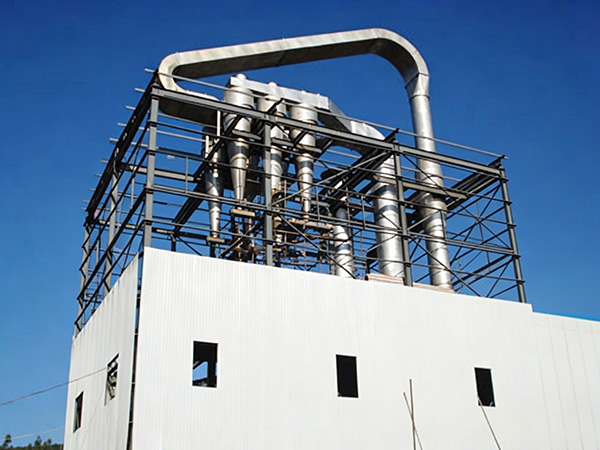
Brief description of starch materials:
Starch is a polymer of glucose, also known as starch powder in the catering industry. The general formula is (C6H10O5)n. When hydrolyzed to the disaccharide stage, it becomes maltose. The chemical formula is (C12H22O11). After complete hydrolysis, glucose is obtained. The chemical formula is (C6H12O6). There are two types of starch: amylose and amylopectin. Starch is a nutrient stored in plants. It is stored in seeds and tubers. The starch content in all types of plants is high.
Function of starch materials:
Starch is first broken down into maltose by saliva amylase in the human body, and then the maltose is broken down into glucose. Glucose undergoes glycolysis to produce pyruvate, or starch is directly decomposed into glucose-1-P, an intermediate product of glycolysis (this part has not had time to mix fully with saliva). and then produce pyruvate. Pyruvate then combines with the enzyme to form acetyl-CoA. Then enter the citric acid cycle. Citric acid is produced first. For every glucose consumed in the citric acid cycle, 6 NADH and 2 FADH2 (electron carriers) are generated. These electrons then generate large amounts of ATP, energy, through ATPase within the mitochondrial membrane structure.
Special airflow dryer for starch working principle of the dryer:
The airflow dryer is a large-scale drying equipment. It adopts the principle of instantaneous drying and uses the rapid movement of heat-carrying air to drive the wet material and suspend the wet material in the hot air. This strengthens the entire drying process and improves heat and mass transfer. At the rate of mass transfer, almost all unbound moisture can be removed from the materials dried by the airflow (For example, the water content of starch and other materials is ≤40%, and the output of finished products can be 13.5%), and the dried materials will not deteriorate, and the output will be significantly improved compared with that of ordinary dryers. Users can achieve high economic benefits in the short term.